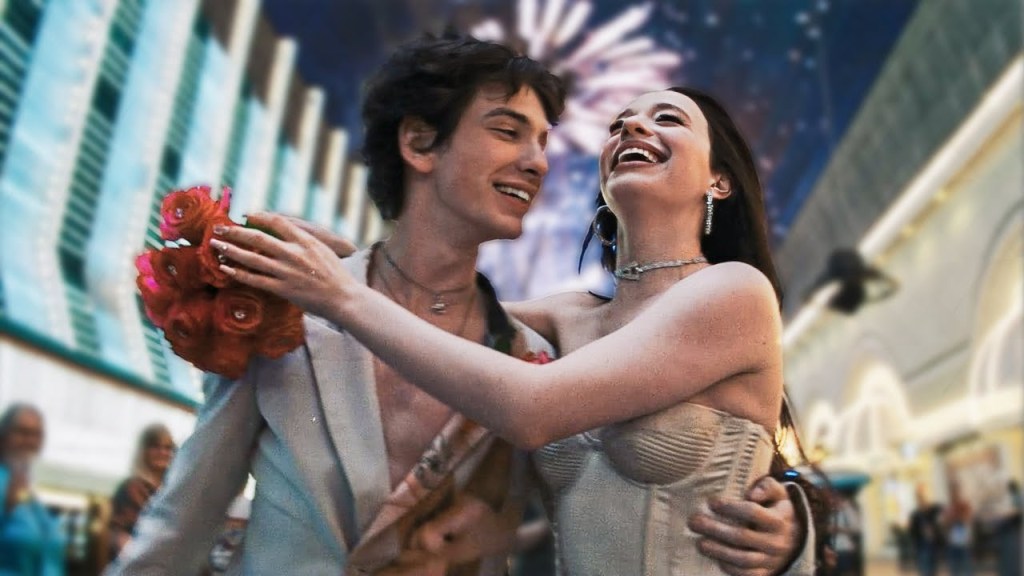
• Before she was a duchess, before the royal titles and global headlines, Meghan Markle was a storyteller. Long before Suits made her a familiar face and even before she stepped into the most scrutinized family in the world, she had already built a space to express herself—her now-defunct lifestyle blog, The Tig. Named after her favorite wine, Tignanello, The Tig was more than a blog; it was a carefully curated reflection of her passions. From travel and wellness to fashion and female empowerment, it was her personal love letter to the art of living well.

    Now, years later, Markle is bringing that sensibility back in a new format with Meghan, With Love, her first solo Netflix project. It’s not a documentary about royal life, nor is it a tell-all about the last few tumultuous years. Instead, it’s a lifestyle docuseries that, much like The Tig, offers a window into the things she values: intentional living, human connection, and the beauty of everyday moments.

    A Blog Reborn—This Time on Netflix

    Think of Meghan, With Love as The Tig reimagined for a global audience. While the blog once featured musings on handwritten letters, slow mornings, and hidden-gem destinations, the Netflix series translates those themes into a visual experience. Each episode takes a deep dive into a subject close to Markle’s heart—conversations with thought leaders, personal reflections on mindful living, and a celebration of the small joys that make life meaningful.

    The series reportedly features intimate discussions with chefs, designers, authors, and wellness experts, creating an atmosphere that is both aspirational and deeply personal. Markle herself acts as a guide, weaving in her own experiences, whether it’s her love for calligraphy (a skill she once used to write wedding invitations) or her belief in the power of gathering around a table for a home-cooked meal.

    Rather than a traditional celebrity-fronted show, Meghan, With Love feels like a love letter to the kind of life she’s building—one filled with purpose, creativity, and depth.

    From Royal Life to a New Identity

    It’s impossible to talk about Meghan Markle’s evolution without acknowledging the seismic shift that took place when she and Prince Harry stepped down as senior royals in 2020. In leaving the institution, Markle left behind a life bound by tradition, scrutiny, and an endless cycle of public expectation. Meghan, With Love isn’t about rehashing that past. Instead, it signals a clear pivot—away from controversy and toward something softer, more reflective.

    Since moving to Montecito, Markle has been reshaping her career on her own terms. While her projects with Prince Harry, including Harry & Meghan and The Me You Can’t See, were rooted in serious, high-stakes storytelling, this series presents a more personal, almost poetic exploration of what matters to her now.

    Where once she was a working royal, bound by protocol, she is now stepping fully into a creative space—one that allows her to reclaim her narrative in a way that is both elegant and intentional.

    The Art of Quiet Luxury—Markle’s Way

    If there’s one thing Markle has always excelled at, it’s curating an aesthetic. From her Suits-era polished minimalism to her understated royal wardrobe, she has long embodied a modern, effortless elegance. Meghan, With Love extends that aesthetic beyond fashion, applying it to lifestyle, home, and personal rituals.

    Visually, the series is expected to be rich with the warm, neutral-toned serenity that has come to define Markle’s public persona—soft linens, handwritten notes, perfectly arranged tablescapes, and sunlit California backdrops. It’s a version of “quiet luxury” that isn’t just about material wealth but about a carefully curated sense of self.

    And in a time when audiences are craving something more authentic than the highly produced sheen of traditional celebrity content, Meghan, With Love offers an alternative: a series that doesn’t chase virality, but instead leans into something more lasting—substance over spectacle.

    More Than a Show—A Statement

    What makes Meghan, With Love so compelling isn’t just the subject matter; it’s the underlying message. For years, Markle’s story has been told through headlines, tabloids, and endless public speculation. This series marks a turning point—it’s not about explaining or defending, but about creating.

    Just as The Tig once provided an escape into her world before the world knew her name, Meghan, With Love is an invitation. An invitation to see a woman who has stepped away from the noise, choosing instead to focus on the life she is actively building.

    It’s a reinvention, yes—but more importantly, it’s a return to something that has always been there: a love for storytelling, for beauty in the details, and for crafting a life with intention.

    And this time, she’s doing it on her own terms.
    Continue reading →: “Meghan, With Love”: Meghan Markle’s Reinvention on Netflix
  • In the pantheon of American musical legends, few voices resonate as profoundly as that of Nat King Cole. Known for his velvety baritone and impeccable phrasing, Cole’s artistry transcended the boundaries of jazz and pop. Yet, one of the most fascinating chapters of his career—his foray into Spanish-language music—remains a cultural milestone that not only broadened his global appeal but also left an indelible mark on Latin American musical heritage.

    A Bold New Direction

    By the late 1950s, Nat King Cole had already cemented his status as a household name in the United States with timeless hits like “Unforgettable” and “Mona Lisa.” Still, as his popularity soared, an unexpected opportunity arose: to record an album entirely in Spanish. Capitol Records, recognizing his growing appeal in Latin America, proposed that Cole reach out to a new audience by embracing the language and sounds of the region.

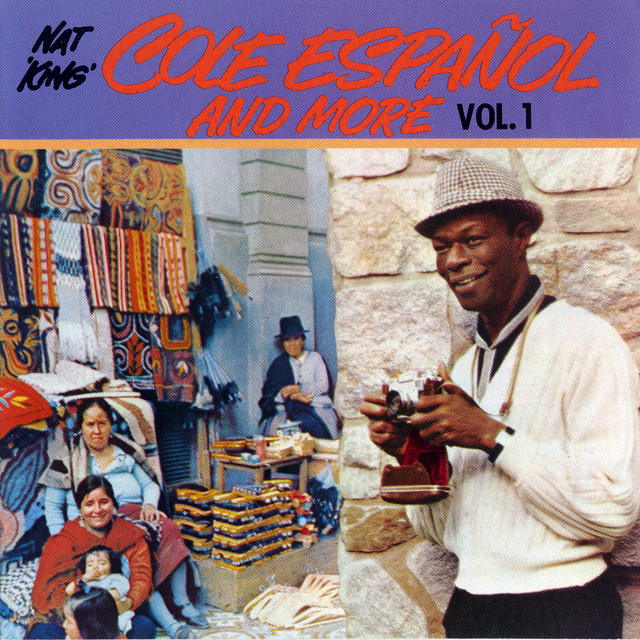
    Thus, in 1958, Cole Español was born—a daring project that saw an American icon performing in a language he did not speak fluently. Guided by native speakers and linguists, Cole learned the lyrics phonetically, an effort that would eventually pay off. His Spanish recordings were not mere attempts at novelty; they were heartfelt endeavors that captured the passion and soul of Latin music.

    Crossing Cultural Borders

    Cole’s venture into Spanish-language music was much more than a marketing strategy—it was an act of cultural diplomacy. In a time when racial barriers and linguistic divides were stark, his willingness to embrace another language signaled an openness to global unity through art. Albums like Cole Español, A Mis Amigos (1959), and More Cole Español (1962) were embraced not only for their musicality but also for what they represented: a bridging of cultures.

    Songs such as “Quizás, Quizás, Quizás,” “Aquellos Ojos Verdes,” and “Perfidia” found new life in Cole’s interpretations. Despite the occasional mispronunciation, his sincerity shone through. Listeners across Latin America were not focused on his accent; they were captivated by the emotion in his voice—a voice that conveyed longing, romance, and the bittersweet passage of time.

    The Art of Interpretation

    Nat King Cole was a master storyteller, and his ability to convey deep emotion was unparalleled. His Spanish recordings were a study in nuance. In his rendition of “Solamente Una Vez,” the subtle inflections and measured pace of his delivery transformed the song into a soulful ballad that spoke to the heart of every listener. Unlike many artists who might have treated a language foreign to them as a mere gimmick, Cole approached these songs with respect and dedication. His careful phrasing and deliberate enunciation ensured that each performance resonated with authenticity.

    The success of his Spanish albums can be attributed to more than just his vocal talent; it was also about the artistry of interpretation. Cole’s collaborations with renowned Latin arrangers and musicians brought an air of authenticity to his recordings. The lush orchestration, the intricate rhythms of boleros, and the gentle sway of mambo and samba melded with his voice to create a sound that was both innovative and timeless.

    A Cultural Bridge and Its Impact

    Nat King Cole’s Spanish-language music was more than a series of successful records—it was a cultural bridge. At a time when American popular music was largely monolingual, Cole’s willingness to step into the realm of Spanish-language performance was revolutionary. His records played on radio stations from Mexico City to Buenos Aires, from Caracas to Santiago de Chile. They resonated deeply with audiences who saw in his work a recognition of their own cultural identity.

    For many Latin Americans, Cole’s music was a welcome acknowledgment of their rich musical traditions. He became a beloved figure, his albums a staple in family gatherings and social events. Cole’s success in this domain challenged prevailing notions of cultural exclusivity and demonstrated that music, when approached with genuine reverence, could transcend linguistic and ethnic boundaries.

    Overcoming Barriers and Embracing Diversity

    The story of Nat King Cole’s Spanish recordings is also a testament to overcoming barriers. In his home country, Cole faced significant racial discrimination, despite his undeniable talent. Segregation, unequal opportunities, and prejudice were part of the everyday reality for African American artists of his time. Yet, in Latin America, his music was celebrated without reservation.

    In countries where race was a less dominant factor in the appreciation of art, Cole’s talent shone unimpeded. His concerts in Latin American cities were met with enthusiastic applause, and his albums received accolades that contrasted sharply with the challenges he faced in the United States. This dichotomy underscored the power of art to heal divisions and build bridges, even when social and cultural barriers seem insurmountable.

    Enduring Influence and Legacy

    More than six decades later, Nat King Cole’s Spanish-language music continues to resonate. His recordings are not relics of a bygone era; they are living, breathing testaments to the timeless power of music. Modern streaming platforms have introduced his work to a new generation of listeners, who are discovering the allure of his voice and the emotion of his performances.

    Contemporary artists have also drawn inspiration from his groundbreaking work. Whether through covers, tributes, or the revival of classic boleros, the influence of Cole’s Spanish albums is evident in today’s musical landscape. His legacy lives on not only in the annals of American music but also in the vibrant tapestry of Latin American culture.

    Cole’s journey into Spanish music is a story of courage, innovation, and an unwavering commitment to artistic excellence. It reminds us that the language of music is universal, capable of transcending borders and touching hearts across continents. For Nat King Cole, singing in Spanish was not a detour but an expansion of his artistic identity—a bold statement that great art is not confined by the limitations of language.

    Reflections on a Timeless Voice

    Listening to Nat King Cole’s Spanish recordings is like taking a journey back in time, to an era when the world was a little smaller and the possibilities of cultural exchange seemed endless. His voice, with all its warmth and subtle imperfections, invites us to remember a time when music served as a bridge between diverse communities. In every note, there is a story—a story of an artist who dared to dream beyond his own borders and, in doing so, left an indelible mark on the global stage.

    In the end, Nat King Cole didn’t just record songs in Spanish—he crafted an enduring dialogue between cultures. His voice continues to speak to millions around the world, proving that the true language of music is one of passion, connection, and timeless elegance.

    Continue reading →: Nat King Cole’s Spanish Legacy: How an American Icon Captivated Latin America
  • In the heart of South America lies Lima, a city where the past and future of gastronomy collide, creating a thriving food scene that captures the essence of Peru’s rich culture. Beyond its bustling streets and coastal views, Lima is a destination for those seeking culinary experiences that are as diverse as the city itself. From ancient flavors passed down through generations to bold, contemporary reinventions, Lima’s food scene is a living testament to the country’s dedication to its culinary roots and its daring embrace of the future.

    As you stroll through the city’s vibrant neighborhoods, the air is thick with the scents of sizzling meats, tangy ceviche, and freshly baked bread. Lima’s food culture is a mix of indigenous ingredients, Spanish influence, African spices, and Japanese precision, with the city’s chefs transforming local produce into gastronomic masterpieces.

    The Flavorful Journey Begins with Ceviche

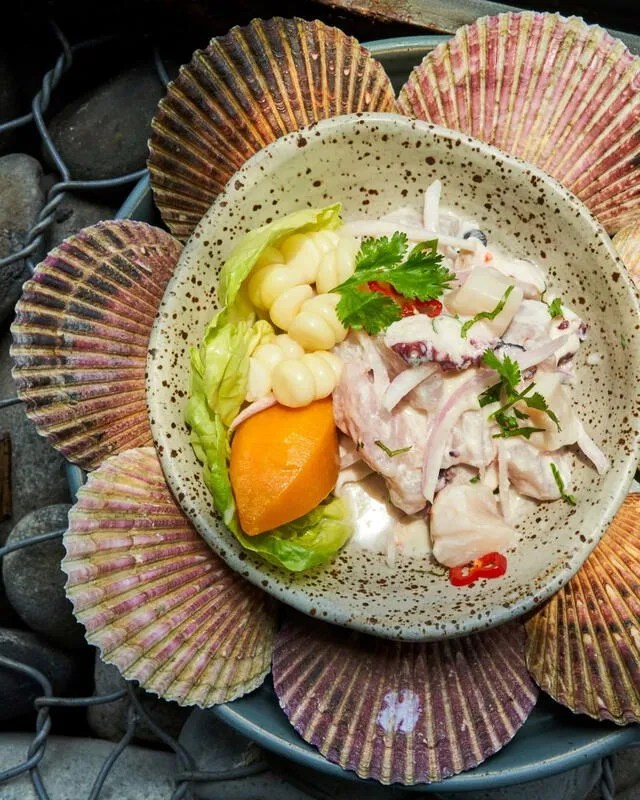
    No visit to Lima would be complete without a taste of its most iconic dish: ceviche. With the Pacific Ocean as its backdrop, Lima is home to some of the world’s freshest seafood. The dish, which combines raw fish with zesty lime, onions, and the fiery heat of aji amarillo (yellow chili), is an explosion of flavor on the palate. Whether served in a traditional tiger’s milk broth or presented with crispy corn kernels, Lima’s ceviche embodies the essence of the city’s coastal identity.

    The best ceviche in Lima can be found at Mercado de Surquillo, a bustling market in the Miraflores district. Here, you’ll find family-owned stalls offering the freshest fish and seafood, where the ceviche is prepared right in front of you. It’s not just a meal—it’s a sensory experience, with the bustling market as the perfect backdrop.

    A Fusion of Cultures: The Nikkei Influence

    Lima’s history is one of migration, with waves of Japanese, Chinese, and European immigrants shaping the city’s culinary identity. Among the most exciting and innovative culinary trends in Lima today is the Nikkei cuisine, a fusion of Japanese techniques and Peruvian ingredients.

    At Maido, Chef Mitsuharu Tsumura blends the precision of Japanese cooking with the bold, earthy flavors of Peru. His tasting menu takes you on a journey through the country’s regional ingredients, from Amazonian fish to Andean potatoes, all prepared with the delicate care of a sushi master. It’s a reflection of how Lima’s chefs are not afraid to play with tradition, melding cultures into something entirely new.

    Pisco: A National Treasure

    No meal in Lima would be complete without a glass of Pisco, Peru’s national spirit. Distilled from grapes grown in the coastal regions of the country, Pisco is the base for Peru’s iconic cocktail, the Pisco Sour. Made with Pisco, lime juice, egg whites, sugar syrup, and bitters, the Pisco Sour is both refreshing and invigorating, the perfect companion to any meal.

    For the perfect Pisco experience, head to Bar Queirolo, a Lima institution since 1879. Here, you can taste different varieties of Pisco and learn about the history of the spirit from the friendly bartenders, who are as passionate about Pisco as the city itself.

    Lima’s Gourmet Revolution

    While traditional dishes like *lomo saltado* (stir-fried beef with potatoes) and aji de gallina (chicken in a rich, creamy sauce) still reign supreme in Lima, the city is also home to a new wave of gourmet dining. Lima’s fine-dining restaurants are making waves on the global stage, with chefs like Virgilio Martínez, of Central, pushing the boundaries of what Peruvian cuisine can be.

    Central, ranked among the world’s 50 best restaurants, is where you’ll experience Peruvian ingredients in ways you never thought possible. Martinez takes diners on a vertical journey, with dishes that reflect the diverse geography of Peru. From the depths of the ocean to the heights of the Andean mountains, each course is an exploration of Peru’s biodiversity, artfully plated and bursting with flavor.

    At Astrid y Gastón, another gem in the city’s gastronomic crown, the renowned chef Gastón Acurio blends traditional flavors with cutting-edge techniques. Here, you can sample everything from the famed Causa Limeña, a layered potato dish, to inventive creations like conchitas a la parmesana (scallops with Parmesan) that showcase Peru’s culinary ingenuity.

    Street Food: Lima’s Hidden Delights

    For all the Michelin-starred restaurants and fine dining experiences, some of the best food in Lima can be found in its bustling streets. Food carts and small eateries dot the city, offering a range of affordable, mouth-watering street food that is an essential part of the Lima experience.

    One of the city’s best-kept secrets is the humble anticucho—skewered beef heart marinated in vinegar, garlic, and spices, then grilled to perfection. It’s crispy on the outside, tender on the inside, and typically served with potatoes or corn. Try it at the anticuchera stalls along Avenida Pardo y Aliaga, where you’ll find locals and tourists alike enjoying this flavorful delicacy.

    Another must-try street food is picarones, a type of Peruvian doughnut made from squash and sweet potato, deep-fried to a golden crisp and drizzled with a spiced syrup. These can be found at any of the many street vendors in Lima’s historic center, where the sweet aroma fills the air.

    Lima’s Culinary Future

    As Lima continues to garner attention as one of the world’s top food capitals, the city’s chefs and restaurateurs are pushing the envelope, experimenting with flavors, techniques, and sustainability. The city’s culinary scene is evolving, but it remains firmly grounded in the traditions that have shaped Peru’s food culture for centuries.

    Whether you’re sampling a ceviche by the sea, savoring the fusion of Nikkei flavors, or discovering the hidden gems on the city’s streets, Lima is a place where food is more than just sustenance—it’s a way of life, a celebration of Peru’s past, present, and future.

    Continue reading →: “Lima: A Culinary Haven Where Tradition Meets Innovation”
  • Some films come and go, leaving a fleeting impression. Then there are those like The Substance, a film that lingers in the mind long after the credits roll. Directed by Coralie Fargeat, The Substance is a bold, visceral body horror thriller that pushes the boundaries of what is expected from modern cinema.

    In the film, Elisabeth Sparkle (played by Demi Moore) is a former Hollywood star whose career has withered as the industry’s obsession with youth swallows her whole. When she stumbles upon a mysterious substance that promises to restore her youth, what begins as a wish come true soon turns into a horrifying descent into madness, self-destruction, and violence.

    The Substance has ignited both praise and controversy, and there are good reasons for that. Here’s why the film is one of the most shocking cinematic experiences in recent memory.

    1. A Devastating Critique of Hollywood’s Youth Obsession

    From the very first frame, The Substance does not attempt to mask its scorn for Hollywood’s relentless and often cruel obsession with youth. Elisabeth’s once-celebrated beauty is no longer enough to keep her in the limelight. In one unsettling moment, Elisabeth is effortlessly replaced by a younger version of herself, and the people around her barely blink an eye.

    While the idea of aging in Hollywood is nothing new, The Substance takes a sharp turn by exploring the emotional and psychological toll on a woman trapped by her image. The film is a raw meditation on how deeply the entertainment industry can warp a person’s sense of self. One of the most harrowing scenes finds Elisabeth in a fit of desperation, violently destroying her makeup in an act of self-loathing — a chilling visual representation of her broken relationship with herself.

    2. A Feminist Spin on Body Horror

    Body horror is often used as a metaphor for the fear of decay and mortality, but in The Substance, it is weaponized against beauty standards.

    One of the most haunting sequences occurs when Elisabeth’s younger self, Sue (played by Margaret Qualley), begins to physically emerge from her body. The scene is reminiscent of the grotesque body transformations seen in classic David Cronenberg films, but Fargeat infuses it with a distinctly feminist perspective. Here, the transformation is not just about physical change but also the profound emotional and psychological toll it takes on Elisabeth. The female body becomes a battleground, not only against external forces but also against the internalized pressure to remain youthful and desirable.

    3. Demi Moore’s Most Daring Performance

    In her career, Demi Moore has long been associated with glamorous roles that capitalize on her beauty. In The Substance, however, she does the unthinkable — she abandons that iconic image to portray a woman in the throes of emotional collapse.

    Moore’s performance is hauntingly raw and stripped of any pretense. It’s not just about the physical transformation Elisabeth undergoes, but about the deep psychological unraveling that Moore brings to life. In both the quiet moments and the explosive breakdowns, Moore delivers a portrayal that’s as captivating as it is unnerving. The audience feels Elisabeth’s internal struggle — her fear, her anger, and her desperate need for control — seeping through every frame.

    4. A Visceral and Sensory Experience

    Director Coralie Fargeat is a master of atmosphere, and The Substance is a prime example of how sound and visuals can combine to create a palpable sense of unease.

    The film is rife with moments that intensify the viewer’s discomfort. The amplified sound of chewing, the distorted whispers that escalate into screams, and the disturbing reflections all work in tandem to build an almost unbearable tension. In one memorable scene, Elisabeth, seated at a dinner table, watches in growing horror as a producer indulges in a seafood dish. The camera zooms in on the grotesque act, and the amplified chewing sound becomes an assault on the senses — forcing the audience to experience Elisabeth’s profound discomfort in an almost physical way.

    5. A Return to Practical Effects

    In an age dominated by CGI, The Substance stands out by choosing to rely on practical effects, elevating its horror to a level that digital manipulation simply cannot achieve.

    Elisabeth’s body, as it decays and transforms, is presented through prosthetics and animatronics. The grotesque, tactile nature of the transformation feels disturbingly real, giving the film an intensity that lingers long after the scene ends. The bloody finale, which reportedly used thousands of liters of fake blood, is a shocking culmination of the film’s horror and a reminder of the power of physical effects.

    A Film That Demands Attention

    At its core, The Substance is not merely a horror film. It is a fierce commentary on how society, particularly Hollywood, forces women into roles they cannot escape. It is a film that asks uncomfortable questions and forces the audience to reckon with the damaging effects of beauty standards.

    With its daring direction, unsettling body horror, and fearless performances — particularly from Demi Moore — The Substance is a film that doesn’t just entertain. It disrupts, it disturbs, and it leaves a lingering impact. It is a film for those willing to confront the darkness within and without.

    And for those who dare to challenge the beauty standards that shape our culture, The Substance is not only a story worth seeing — it’s a story worth feeling.

    Continue reading →: The Substance: A Body Horror That Confronts Hollywood’s Obsession with Youth

I’m Diana

Welcome to Le Joy of Living—a space for those who chase the thrill of good food and travel, devour books, get lost in cinema, and live by the rhythm of good music. Let’s explore, create, and be inspired!

Let’s keep the joy flowing.