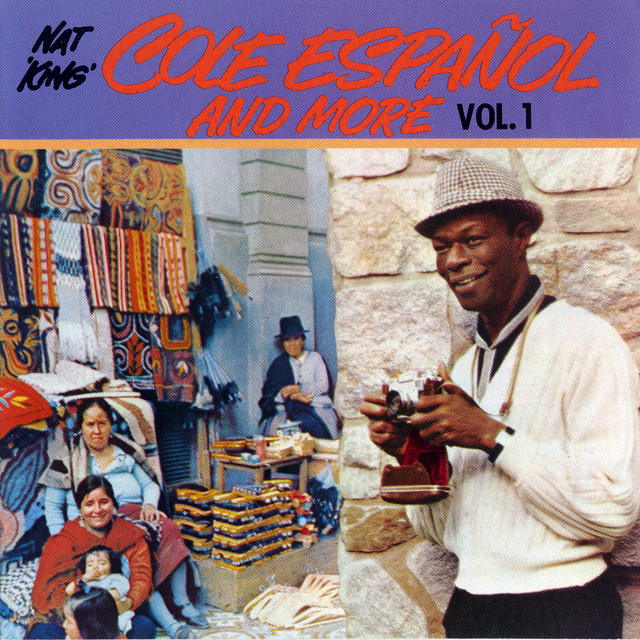
In the pantheon of American musical legends, few voices resonate as profoundly as that of Nat King Cole. Known for his velvety baritone and impeccable phrasing, Cole’s artistry transcended the boundaries of jazz and pop. Yet, one of the most fascinating chapters of his career—his foray into Spanish-language music—remains a cultural milestone that not only broadened his global appeal but also left an indelible mark on Latin American musical heritage.
A Bold New Direction
By the late 1950s, Nat King Cole had already cemented his status as a household name in the United States with timeless hits like “Unforgettable” and “Mona Lisa.” Still, as his popularity soared, an unexpected opportunity arose: to record an album entirely in Spanish. Capitol Records, recognizing his growing appeal in Latin America, proposed that Cole reach out to a new audience by embracing the language and sounds of the region.
Thus, in 1958, Cole Español was born—a daring project that saw an American icon performing in a language he did not speak fluently. Guided by native speakers and linguists, Cole learned the lyrics phonetically, an effort that would eventually pay off. His Spanish recordings were not mere attempts at novelty; they were heartfelt endeavors that captured the passion and soul of Latin music.
Crossing Cultural Borders
Cole’s venture into Spanish-language music was much more than a marketing strategy—it was an act of cultural diplomacy. In a time when racial barriers and linguistic divides were stark, his willingness to embrace another language signaled an openness to global unity through art. Albums like Cole Español, A Mis Amigos (1959), and More Cole Español (1962) were embraced not only for their musicality but also for what they represented: a bridging of cultures.
Songs such as “Quizás, Quizás, Quizás,” “Aquellos Ojos Verdes,” and “Perfidia” found new life in Cole’s interpretations. Despite the occasional mispronunciation, his sincerity shone through. Listeners across Latin America were not focused on his accent; they were captivated by the emotion in his voice—a voice that conveyed longing, romance, and the bittersweet passage of time.
The Art of Interpretation
Nat King Cole was a master storyteller, and his ability to convey deep emotion was unparalleled. His Spanish recordings were a study in nuance. In his rendition of “Solamente Una Vez,” the subtle inflections and measured pace of his delivery transformed the song into a soulful ballad that spoke to the heart of every listener. Unlike many artists who might have treated a language foreign to them as a mere gimmick, Cole approached these songs with respect and dedication. His careful phrasing and deliberate enunciation ensured that each performance resonated with authenticity.
The success of his Spanish albums can be attributed to more than just his vocal talent; it was also about the artistry of interpretation. Cole’s collaborations with renowned Latin arrangers and musicians brought an air of authenticity to his recordings. The lush orchestration, the intricate rhythms of boleros, and the gentle sway of mambo and samba melded with his voice to create a sound that was both innovative and timeless.
A Cultural Bridge and Its Impact
Nat King Cole’s Spanish-language music was more than a series of successful records—it was a cultural bridge. At a time when American popular music was largely monolingual, Cole’s willingness to step into the realm of Spanish-language performance was revolutionary. His records played on radio stations from Mexico City to Buenos Aires, from Caracas to Santiago de Chile. They resonated deeply with audiences who saw in his work a recognition of their own cultural identity.
For many Latin Americans, Cole’s music was a welcome acknowledgment of their rich musical traditions. He became a beloved figure, his albums a staple in family gatherings and social events. Cole’s success in this domain challenged prevailing notions of cultural exclusivity and demonstrated that music, when approached with genuine reverence, could transcend linguistic and ethnic boundaries.
Overcoming Barriers and Embracing Diversity
The story of Nat King Cole’s Spanish recordings is also a testament to overcoming barriers. In his home country, Cole faced significant racial discrimination, despite his undeniable talent. Segregation, unequal opportunities, and prejudice were part of the everyday reality for African American artists of his time. Yet, in Latin America, his music was celebrated without reservation.
In countries where race was a less dominant factor in the appreciation of art, Cole’s talent shone unimpeded. His concerts in Latin American cities were met with enthusiastic applause, and his albums received accolades that contrasted sharply with the challenges he faced in the United States. This dichotomy underscored the power of art to heal divisions and build bridges, even when social and cultural barriers seem insurmountable.
Enduring Influence and Legacy
More than six decades later, Nat King Cole’s Spanish-language music continues to resonate. His recordings are not relics of a bygone era; they are living, breathing testaments to the timeless power of music. Modern streaming platforms have introduced his work to a new generation of listeners, who are discovering the allure of his voice and the emotion of his performances.
Contemporary artists have also drawn inspiration from his groundbreaking work. Whether through covers, tributes, or the revival of classic boleros, the influence of Cole’s Spanish albums is evident in today’s musical landscape. His legacy lives on not only in the annals of American music but also in the vibrant tapestry of Latin American culture.
Cole’s journey into Spanish music is a story of courage, innovation, and an unwavering commitment to artistic excellence. It reminds us that the language of music is universal, capable of transcending borders and touching hearts across continents. For Nat King Cole, singing in Spanish was not a detour but an expansion of his artistic identity—a bold statement that great art is not confined by the limitations of language.
Reflections on a Timeless Voice
Listening to Nat King Cole’s Spanish recordings is like taking a journey back in time, to an era when the world was a little smaller and the possibilities of cultural exchange seemed endless. His voice, with all its warmth and subtle imperfections, invites us to remember a time when music served as a bridge between diverse communities. In every note, there is a story—a story of an artist who dared to dream beyond his own borders and, in doing so, left an indelible mark on the global stage.
In the end, Nat King Cole didn’t just record songs in Spanish—he crafted an enduring dialogue between cultures. His voice continues to speak to millions around the world, proving that the true language of music is one of passion, connection, and timeless elegance.





 Le joy
Leave a comment